
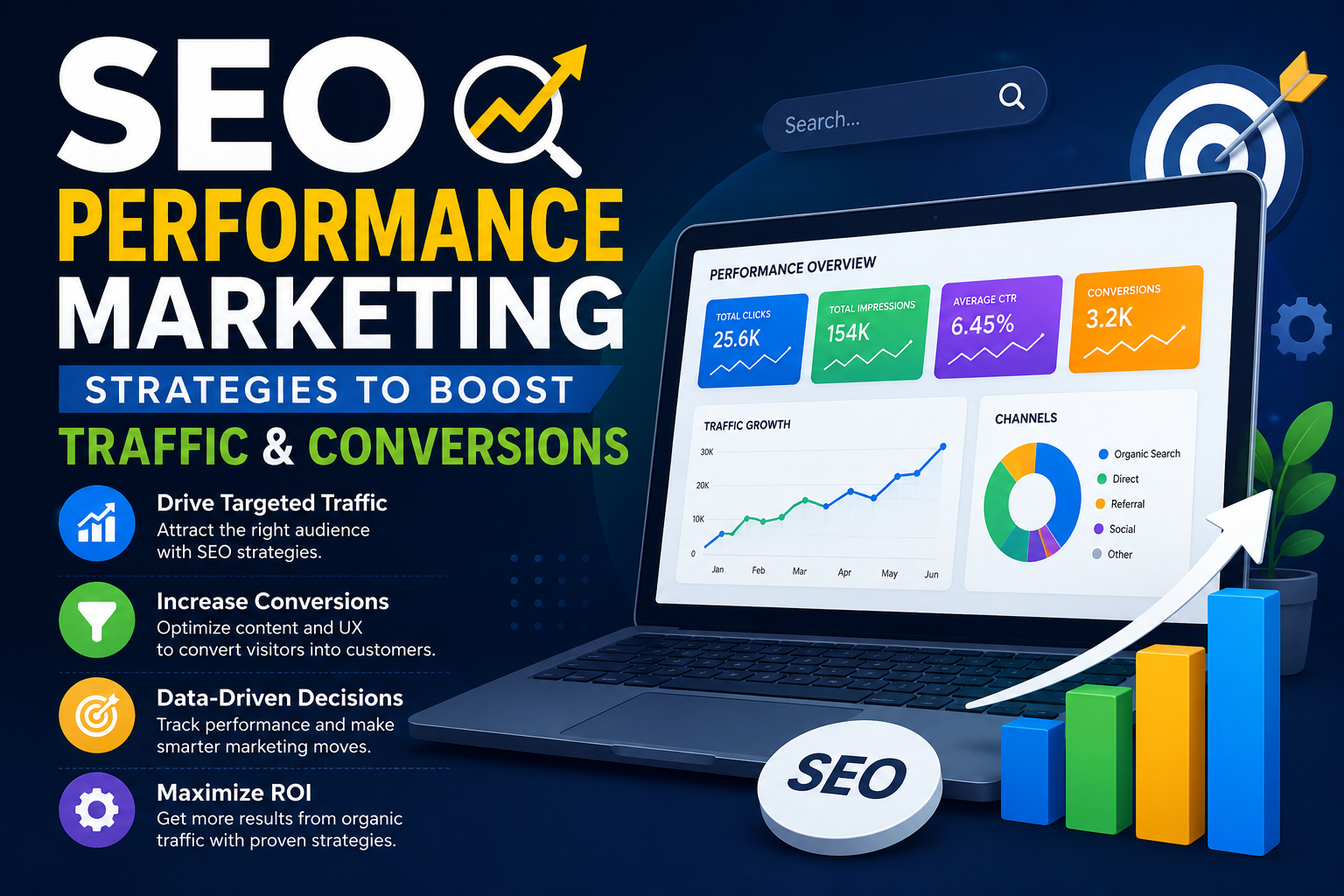
In today’s highly competitive digital landscape, businesses cannot rely on traditional marketing alone. The online space is driven by data, algorithms, user intent, and measurable outcomes. This is where seo performance marketing becomes a powerful approach that combines the long-term benefits of search engine optimization with the measurable, ROI-focused nature of performance marketing.
Unlike traditional SEO that focuses mainly on rankings, or paid marketing that focuses on immediate conversions, seo performance marketing blends both worlds. It is designed not just to bring traffic but to ensure that traffic converts into leads, sales, and long-term business growth.
This article explores how seo performance marketing works, why it matters, and the strategies businesses can use to increase traffic and conversions effectively.
Understanding SEO Performance Marketing and Its Core Concept
SEO performance marketing is a data-driven digital marketing approach that focuses on measurable results from organic search efforts. It combines SEO techniques (like keyword optimization, content creation, and link building) with performance tracking metrics (like conversions, ROI, engagement rate, and revenue impact).
The main idea is simple: instead of optimizing only for search engines, you optimize for business performance. That means every piece of content, keyword strategy, and landing page is evaluated based on how much value it brings to the business.
For example, ranking #1 on Google is useful, but in seo performance marketing, the real question is: Does that ranking generate leads or sales?
This shift in mindset is what makes modern SEO more powerful and business-focused than ever before.
Why SEO Performance Marketing Matters in Modern Digital Growth
The importance of seo performance marketing has increased significantly due to rising digital competition and changing user behavior. Businesses now need strategies that deliver measurable outcomes rather than just visibility.
One of the biggest reasons it matters is accountability. Traditional marketing often focuses on impressions or reach, but performance marketing focuses on real actions like clicks, conversions, sign-ups, or purchases.
Another reason is cost efficiency. When SEO is aligned with performance goals, businesses reduce wasted effort on low-intent traffic and instead attract users who are more likely to convert.
Additionally, search engines have evolved. Google now prioritizes user experience, content quality, and intent satisfaction. This aligns perfectly with seo performance marketing, where the goal is to satisfy both users and business objectives simultaneously.
Ultimately, this approach ensures that every marketing effort contributes directly to revenue growth.
Keyword Strategy in SEO Performance Marketing
A strong keyword strategy is the backbone of successful seo performance marketing. However, unlike traditional SEO keyword research, this approach focuses on commercial intent and conversion potential.
Instead of targeting only high-volume keywords, marketers also focus on:
- Transactional keywords (e.g., “buy SEO services”)
- Problem-solving keywords (e.g., “how to increase website traffic fast”)
- Local intent keywords (e.g., “SEO agency near me”)
- Long-tail keywords with high conversion intent
The goal is not just to attract traffic but to attract the right traffic. Users who are actively searching for solutions are far more valuable than those who are casually browsing.
Another important aspect is keyword mapping. Each keyword should be assigned to a specific page with a clear conversion goal, whether it is lead generation, product sales, or inquiry submission.
In seo performance marketing, keyword strategy is not just about ranking—it is about revenue alignment.
High-Quality Content as the Engine of Performance Marketing
Content plays a central role in seo performance marketing because it directly influences user engagement, trust, and conversions.
High-quality content is not just informative; it is strategic. It guides users through the buyer journey—from awareness to consideration to decision.
Effective performance-driven content includes:
- Problem-focused blog posts
- In-depth guides and tutorials
- Comparison pages (e.g., “SEO vs Paid Ads”)
- Case studies showing real results
- Landing pages optimized for conversion
The key difference is that every content piece has a purpose. It is not created just to rank but to drive action.
For example, a blog about “SEO performance marketing strategies” should naturally lead readers toward consulting services, sign-ups, or further engagement.
Well-structured, engaging, and valuable content improves dwell time, reduces bounce rate, and increases conversion probability—making it a critical part of any seo performance marketing strategy.
Technical SEO and Its Role in Performance Optimization
Technical SEO ensures that a website is accessible, fast, and optimized for search engines and users alike. In seo performance marketing, technical SEO directly impacts conversion performance.
Key technical elements include:
- Website speed optimization
- Mobile responsiveness
- Clean URL structure
- Proper indexing and crawlability
- Secure HTTPS connection
- Structured data implementation
A slow or poorly structured website can significantly reduce conversions, even if it ranks well. Users expect fast, seamless experiences, and search engines reward sites that deliver them.
For performance marketing, technical SEO is not optional—it is foundational. It ensures that traffic generated through SEO efforts actually results in meaningful engagement and conversions.
On-Page SEO Optimization for Better Conversion Rates
On-page SEO is where seo performance marketing becomes highly actionable. It involves optimizing individual pages to improve both ranking and conversion effectiveness.
Key on-page elements include:
- Title tags and meta descriptions optimized for click-through rate
- Clear headings (H1, H2, H3) for readability
- Keyword placement without stuffing
- Internal linking for user flow
- Strong call-to-action (CTA) placement
- Optimized images and alt text
In performance marketing, on-page SEO goes beyond ranking. It focuses heavily on user experience and persuasion.
For example, a landing page should not only rank for “SEO services” but also convince users to contact or purchase the service. This balance between optimization and conversion is the essence of seo performance marketing.
Conversion Tracking and Performance Analytics
One of the defining features of seo performance marketing is its reliance on data and analytics.
Without tracking, SEO efforts become guesswork. Performance marketing requires clear measurement of:
- Organic traffic sources
- Conversion rates
- Bounce rates
- Average session duration
- Cost per acquisition (CPA)
- Return on investment (ROI)
Tools like Google Analytics, Search Console, and heatmaps help marketers understand how users interact with the website.
For example, if a page gets high traffic but low conversions, it signals a problem with content, design, or user intent alignment.
By continuously analyzing performance data, businesses can refine their SEO strategies for better results. This makes seo performance marketing a continuously improving system rather than a static strategy.
Link Building and Authority in Performance-Based SEO
Backlinks remain one of the strongest ranking factors in SEO, but in seo performance marketing, quality matters more than quantity.
The focus is on acquiring links from relevant, authoritative, and niche-related websites that can drive both SEO value and referral traffic.
Effective strategies include:
- Guest posting on industry blogs
- Digital PR campaigns
- Content collaborations
- Resource link building
- Broken link building
High-quality backlinks not only improve rankings but also increase trust and credibility. This trust directly influences conversion rates because users are more likely to engage with authoritative brands.
In performance marketing, link building is not just about SEO authority—it is about building brand reputation and traffic quality.
User Experience (UX) and Its Impact on SEO Performance Marketing
User experience is a critical ranking and conversion factor in modern seo performance marketing.
Even if a website ranks well, poor UX can destroy conversion potential. Google also considers UX signals such as bounce rate, page interaction, and dwell time.
Key UX elements include:
- Clean and intuitive navigation
- Fast loading pages
- Mobile-friendly design
- Clear call-to-action buttons
- Visually appealing layout
A good user experience ensures that visitors stay longer, engage more, and are more likely to convert.
In performance marketing terms, UX is directly tied to revenue. A well-designed site turns organic traffic into measurable business growth.
Future of SEO Performance Marketing and Final Thoughts
The future of seo performance marketing is moving toward even greater integration of AI, automation, and user intent analysis. Search engines are becoming smarter, and businesses must adapt by focusing more on value and less on manipulation.
In the future, SEO will be even more closely tied to business performance metrics. Marketers will rely heavily on predictive analytics, behavioral data, and personalized content strategies.
The most successful businesses will be those that treat SEO not as a ranking tool but as a full performance engine that drives measurable growth.
In conclusion, seo performance marketing is not just a trend—it is the evolution of digital marketing. It ensures that every effort contributes to real business outcomes, from traffic generation to final conversion.
Businesses that adopt this approach early will gain a significant competitive advantage in the digital marketplace.